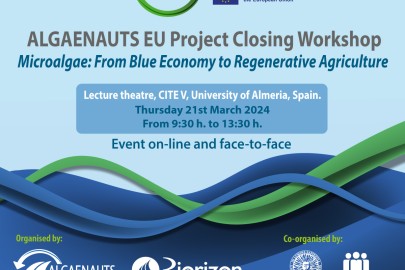
Great reception for the final Workshop of the European Project ALGAENAUTS
After two and a half years of major research efforts to discover the biopesticidal contributions of certain strains of microalgae, the ALGAENAUTS project led by Biorizon Biotech in Almeria, forming a benchmark at European level in research and development of microalgae-based biopesticides, is drawing to a close.
On 31 March 2024, one of the most important European projects centred on the development of sustainable solutions for agriculture using microalgae, from a circular blue bioeconomy approach, came to an end.
In February 2021, the European Commission selected Biorizon Biotech and its ALGAENAUTS project as one of the 10 winning projects, from the 159 submitted to the competitive call “Blue Economy Window 2020”, financed by the European Maritime and Fisheries Fund.
Thanks to the research efforts of the ALGAENAUTS project, with a budget of 1.4 million euros, a new line of biopesticide products based on microalgae biomass has been developed on a pre-commercial scale. These microalgae have been selected for their agronomic properties and cultivated in a sustainable way, including valorisation of the process by-products to obtain biostimulants. As a result, not only has a new type of product been developed, but also a methodology and processing systems, which have enabled the implementation of a zero-waste process.
The University of Almeria and the Cajamar Foundation have both contributed to the success of this project, entities with which Biorizon Biotech, as project coordinator, has worked regarding the design of a novel system for the extraction of metabolites which have biopesticidal effects on phytopathogenic fungi, as well as the field validation of the new products developed, both in terms of biostimulation and fungus control.
Almeria plays hosts to the ALGAENAUTS project closing Workshop
This closing workshop of the European ALGAENAUTS project was the finishing touch for this project, the aim of which was to promote the advances in research into biopesticides and biostimulants made over the last two and a half years.
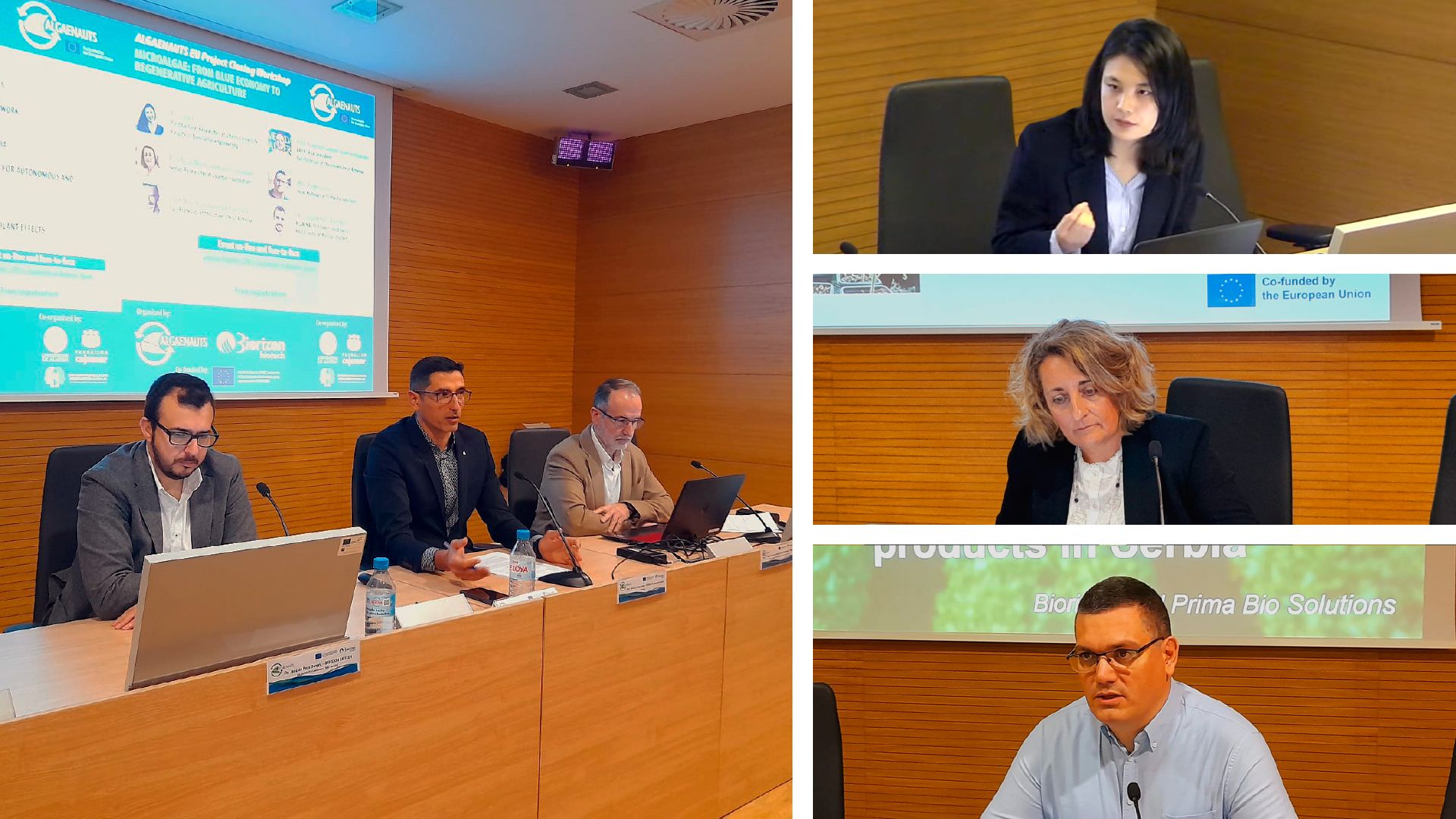
On 21 March, the Workshop entitled “From the Blue Economy to Regenerative Agriculture” was held, which addressed relevant issues such as the discovery of biostimulants from agricultural biomass, microalgae in agriculture and the shortcomings of the EU regulatory framework, experiences and contributions of microalgae used in agriculture in other countries, AI techniques applied to the stand-alone and sustainable operation of microalgae production in the European REALM project, and finally, a general overview of the ALGAENAUTS project and the field trials carried out for the evaluation of the biopesticide and biostimulant products obtained.
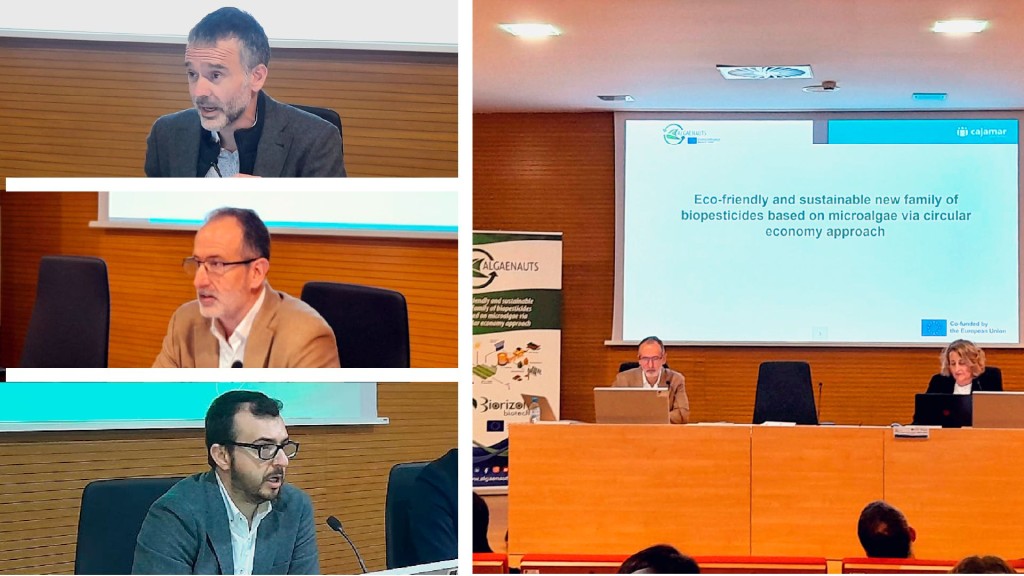
The University of Almeria was the venue this final workshop of the ALGAENAUTS project. University of Almeria Professor Jose Luis Casas and Director of CIESOL (Solar Energy Research Centre) got the session under way, which included speakers of international renown such as Dr. Jing Li, Postdoctoral Researcher at the University of Ghent (Belgium) and Rajko Lazic, Technical Director of the Serbian company Prima Bio Solutions, University of Almeria Professor Gabriel Acién and Vice-President of the European Algae Biomass Association (EABA), Dr. Alicia Mª González Céspedes, Researcher at the Cajamar Foundation Experimental Station “Las Palmerillas”, University of Almería Professor José Luis Guzmán Sánchez, lead researcher for the European REALM project, as well as Dr. Joaquín Pozo Dengra, Coordinator of the ALGAENAUTS project and R&D Director at Biorizon Biotech.
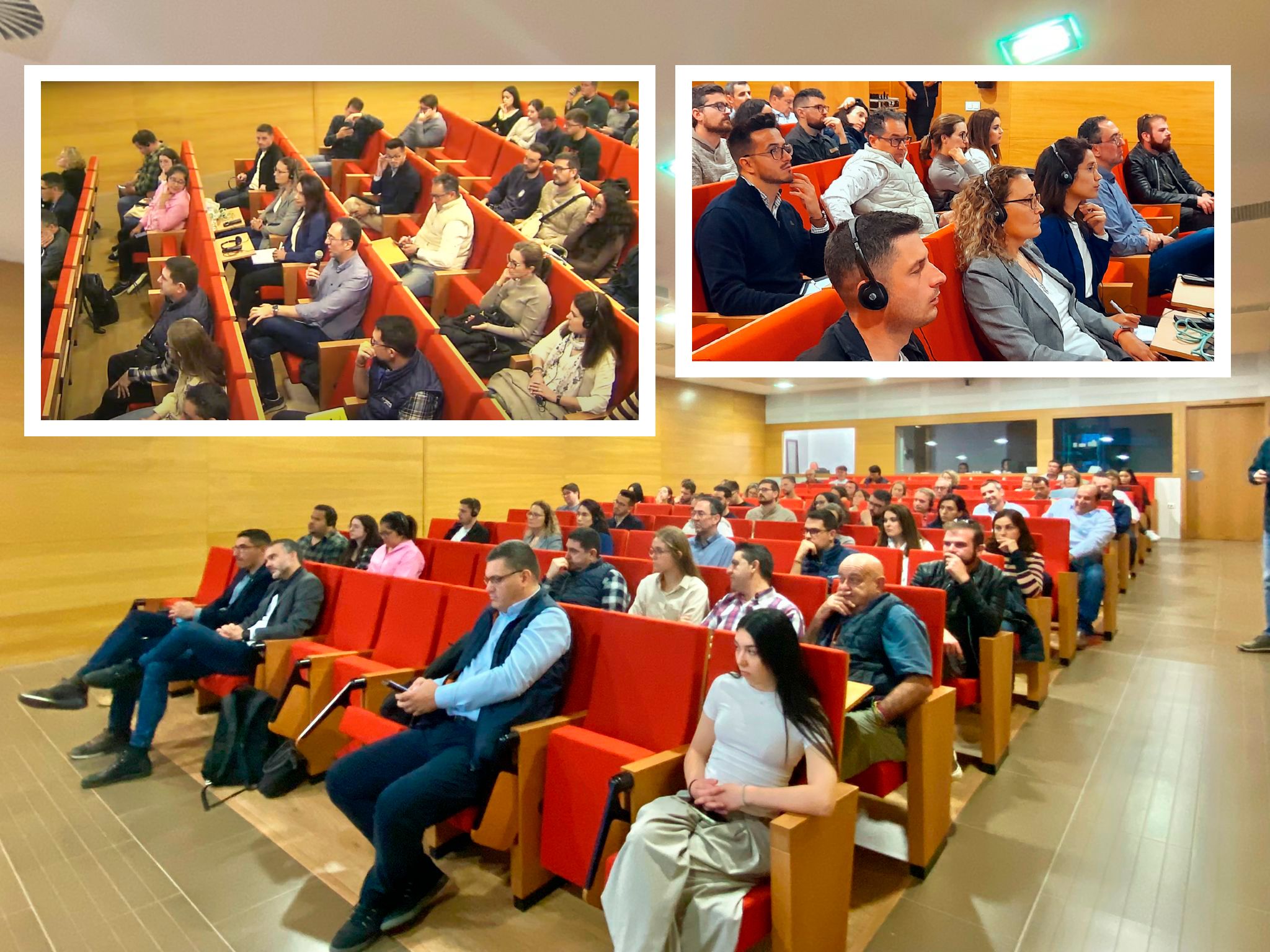
This Workshop was organised in collaboration with the University of Almeria, the Cajamar Foundation and the BiorizonBiotech – UAL Chair of Regenerative Agriculture.
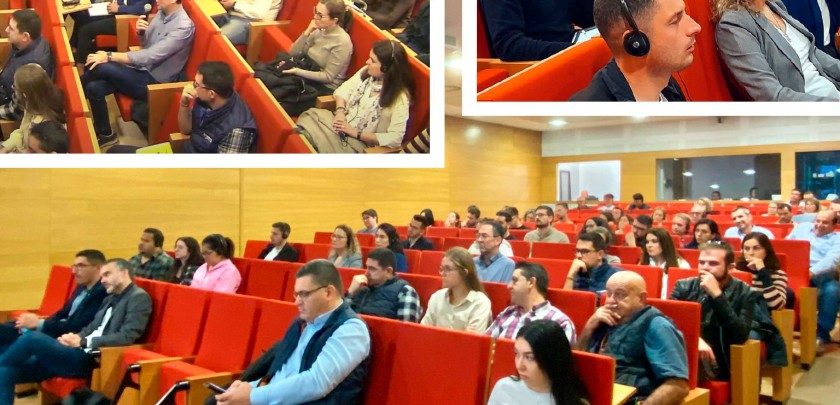
The event took place in person in the Assembly Hall of Science & Technology building V (CITE V) at the University of Almeria, and could also be followed online. The event was very well received, with more than 60 people attending in person and 160 online.